

Article Summary: Stainless steel pneumatic actuators have become a cornerstone of modern industrial automation due to their durability, precision, and corrosion resistance. This comprehensive blog explores the benefits, applications, working principles, selection criteria, and maintenance tips for stainless steel pneumatic actuators. It also highlights why Juhang's advanced pneumatic actuators are a preferred choice for industries worldwide.
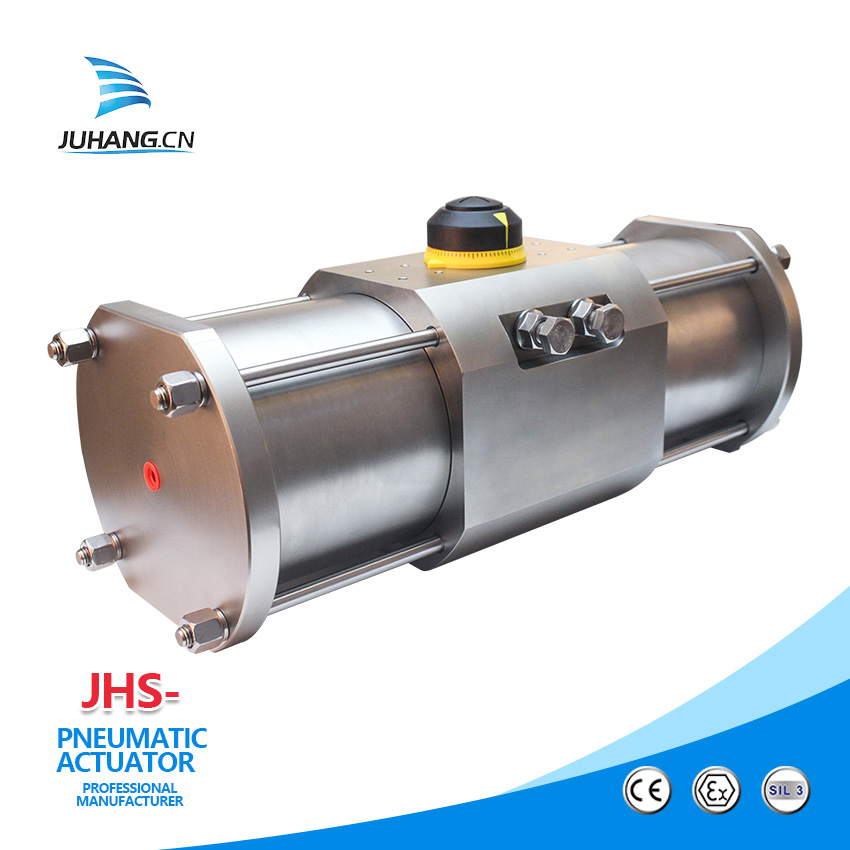
Pneumatic actuators are mechanical devices that use compressed air to produce motion. Stainless steel variants are particularly valued in environments where corrosion resistance, hygiene, and durability are crucial, such as chemical plants, food processing, and marine applications. Juhang offers a wide range of stainless steel pneumatic actuators designed to meet stringent industry standards.
With the rise of automation, industries are increasingly relying on stainless steel pneumatic actuators for precise valve control, efficient energy use, and robust performance under harsh conditions.
The basic operation of a stainless steel pneumatic actuator involves converting compressed air pressure into mechanical motion. The actuator typically consists of a cylinder, piston, and shaft. Compressed air enters the actuator, causing the piston to move and transmit motion to the attached valve or device.
There are two main motion types:
Juhang manufactures several types of stainless steel pneumatic actuators, including:
Stainless steel pneumatic actuators are widely used in:
Selecting the right actuator involves considering several factors:
Proper maintenance ensures your stainless steel pneumatic actuator performs reliably over time:
| Feature | Single-Acting | Double-Acting | Rack & Pinion | Scotch Yoke |
|---|---|---|---|---|
| Motion Type | Linear | Linear | Rotary | Rotary |
| Return Mechanism | Spring | Air Pressure | Air Pressure | Air Pressure |
| Torque Output | Medium | High | High | Very High |
| Applications | Small Valves | General Industrial | Medium to Large Valves | High Torque Requirements |
| Cost | Low | Medium | Medium | High |
Stainless steel actuators offer superior corrosion resistance, higher durability, and are suitable for hygienic environments compared to aluminum actuators.
Yes, their hygienic design and corrosion resistance make them ideal for food and beverage applications.
Single-acting actuators are suitable for simple operations with spring return, while double-acting actuators provide precise control in both directions.
Regular inspections, lubrication, and seal replacements are recommended to ensure long-term performance.
Juhang actuators are known for high precision, durability, wide range of options, and compliance with international industrial standards.
Stainless steel pneumatic actuators are indispensable in modern industrial automation due to their durability, precision, and versatility. By choosing high-quality actuators from reputable manufacturers like Juhang, industries can ensure reliable and efficient operations across a variety of applications. For personalized solutions and expert advice on selecting the right stainless steel pneumatic actuator, contact us today and experience the Juhang advantage.


