

In the evolving landscape of industrial automation, the demand for reliable, fail-safe, and high-cycle actuation continues to rise. Engineers and system integrators consistently evaluate various actuation technologies to achieve precise valve modulation. Among these, the pneumatic actuator remains a cornerstone for critical applications due to its inherent simplicity, rapid response, and explosion-proof characteristics. This article examines recent technical trends, performance benchmarks, and quality assurance protocols shaping today’s market.
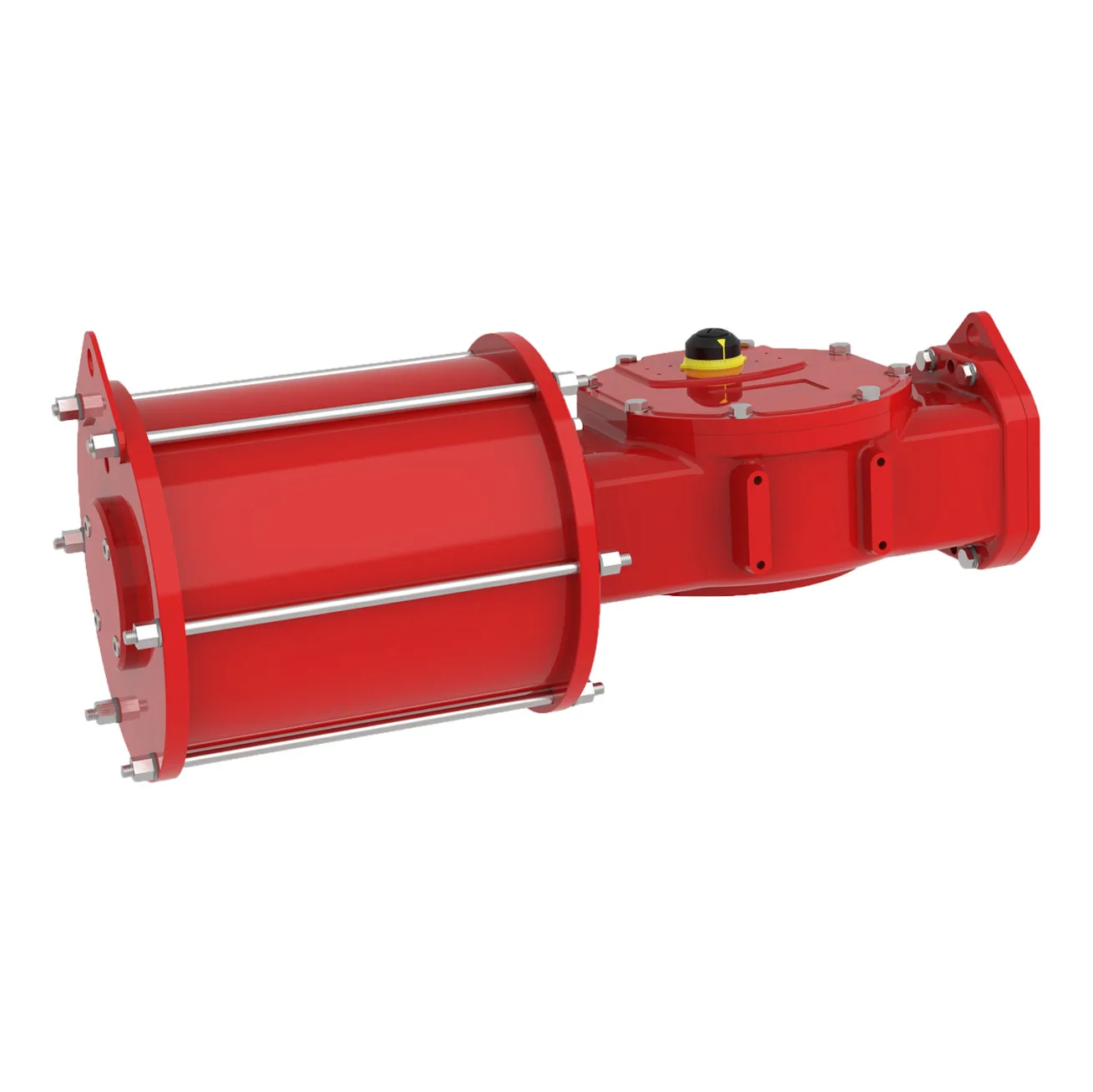
Unlike electric or hydraulic alternatives, this technology requires no electrical wiring at the point of operation, making it ideal for petrochemical, mining, and gas transmission facilities. The absence of spark risks and the ability to withstand wide temperature fluctuations are significant operational benefits. Furthermore, the modular construction of a modern pneumatic actuator allows for easy integration of limit switches, solenoid valves, and positioners, enabling advanced diagnostics and partial stroke testing without system shutdown.
When selecting actuation solutions for continuous duty, end users focus on bore finish, seal material compatibility, and torque output consistency. Rack-and-pinion designs dominate due to their linear torque characteristics and compact footprint. Meanwhile, scotch-yoke mechanisms provide higher break-open torque for large-diameter quarter-turn valves. To guarantee durability, manufacturers must implement rigorous material traceability and real-time functional testing. A poorly manufactured unit leads to seat leakage, stem galling, and unplanned downtime.
Current industry standards require each actuation device to undergo proof of pressure testing, cycle validation, and environmental sealing verification. Advanced production facilities now utilize computer-controlled test benches that record torque deviation, stroke linearity, and air consumption metrics. Such procedures align with ISO 5211 mounting dimensions and VDI/VDE 3845 accessory interfaces, ensuring interchangeability across valve brands. Without a disciplined quality management system, consistency cannot be assured, especially in high-volume manufacturing scenarios.
The table below highlights distinguishing features across three widely used actuation principles. It is evident that each technology serves distinct operational envelopes, yet the pneumatic category offers the best balance of speed, safety, and total cost of ownership for modulating and on/off applications in explosive atmospheres.
| Actuation Type | Energy Source | Typical Response Time | Hazardous Area Suitability | Maintenance Complexity |
|---|---|---|---|---|
| Pneumatic Rack-and-Pinion | Compressed air / inert gas | Fast (under half second) | Excellent (intrinsically safe) | Low (replaceable seals) |
| Electric Motorized | AC/DC power | Slow to moderate | Requires explosion-proof enclosure | Moderate (gearbox, motor) |
| Hydraulic | Pressurized oil | Moderate to fast | Good (no sparks) | High (fluid contamination risk) |
Industry 4.0 initiatives have prompted manufacturers to embed non-contact magnetic sensors and wireless communication modules directly into actuator housings. These enhancements enable remote stroke monitoring, real-time torque trending, and predictive maintenance alerts. The integration of AS-interface and IO-Link protocols reduces wiring complexity while delivering granular performance data to distributed control systems. Nevertheless, the fundamental reliability of the mechanical conversion—from air pressure to rotational torque—remains the primary differentiator. Even the most sophisticated electronics cannot compensate for inadequate internal component precision.
Corrosion resistance is paramount for offshore platforms, wastewater treatment, and chemical processing. Anodized aluminum bodies with epoxy polyester coating are common for general industrial use, whereas stainless steel variants (CF8M or duplex) address aggressive media environments. Internally, hard-anodized cylinder bores combined with low-friction PTFE-impregnated piston guides significantly extend cycle life. Premium units undergo a 500,000 cycle durability test under full load, validating seal integrity and torque retention. Substandard materials lead to premature failure, jeopardizing plant safety and production targets.
Correct specification goes beyond simple torque tables. Engineers must account for dynamic torque factors: seat friction variations due to temperature, pipeline pressure differentials, and safety factors for aging valves. A pneumatic actuator typically requires a safety margin of thirty percent above the break torque of the valve. Additionally, fail-safe action (spring-return vs. double-acting) dictates the control scheme and air reservoir capacity. Oversizing causes unnecessary capital expense and slow stroking speeds, while undersizing results in incomplete seating or sticking. Computational sizing tools offered by experienced manufacturers reduce these risks, provided their torque data is based on empirical validation rather than theoretical calculation.
To consistently deliver reliable actuation solutions, component traceability from raw material to finished assembly is mandatory. Leading manufacturers implement ISO 9001 certified processes, but the most rigorous facilities also adhere to ISO 14001 environmental standards and ATEX directive for potential explosive atmospheres. Each production lot must include documented evidence of hardness testing, coating thickness verification, and calibrated torque output curves. Without such systematic quality assurance, batch-to-batch variation becomes unacceptable for mission-critical applications. Specifically, the seal groove dimensions and piston rack teeth geometry require statistical process control to maintain interchangeability and leak integrity over extended service intervals.
A municipal water filtration facility recently retrofitted its multimedia filter backwash system, which previously suffered from frequent electric actuator failures due to moisture ingress and insufficient duty cycle ratings. After re-engineering the control logic, the facility adopted a quarter-turn pneumatic actuator arrangement with stainless steel trim and Viton seals. The new configuration achieved over two million cycles without maintenance intervention, reducing unplanned outages by a substantial margin. This real-world example underscores the importance of selecting actuation technology that aligns with application-specific environmental challenges and cycle expectations.
Proper installation begins with clean, dry, and lubricated compressed air conforming to ISO 8573-1 class 3 or better. Moisture carryover accelerates internal corrosion and washes away lubricating films. During commissioning, technicians should verify stroke timing, solenoid valve compatibility, and fail-safe action direction. A six-month periodic check typically includes re-torquing mounting bolts, inspecting air line filters, and manually testing the manual override mechanism. Units operating in sandy or high-humidity zones benefit from breather ports fitted with hydrophobic filters. When maintenance is required, seal replacement kits must correspond exactly to the bore diameter and material compatibility of the service media. Failure to follow these guidelines significantly shortens service life.
Reliable actuation performance is not achieved by design alone—it demands thorough verification. A comprehensive internal testing center includes computer-controlled cycle testers, environmental chambers for thermal shock simulation, and helium leak detection systems for seal integrity validation. Hydraulic burst test stands confirm housing structural strength at two hundred percent of rated supply pressure. Each finished unit should receive a unique serial number tied to digital records of every test parameter. Such infrastructure, combined with statistical quality control, eliminates the guesswork for end users regarding product reliability. Notably, when a manufacturer invests in such advanced testing equipment, it directly translates to lower field failure rates and higher process availability for plant operators.
The next frontier for actuation technology involves digital twins—virtual replicas that simulate wear progression using real-time load data. By integrating torque sensors and position feedback with cloud analytics, asset managers can predict remaining useful life and schedule maintenance during planned turnarounds. This transition from reactive to predictive maintenance reduces inventory costs for spare parts and eliminates random breakdowns. However, the foundational mechanical robustness of the actuator remains the prerequisite. No digital intelligence can salvage an under-engineered product suffering from rapid seal degradation or pinion wear. Therefore, the convergence of mechanical excellence and smart diagnostics defines the premium tier of industrial valves and actuation.
When evaluating suppliers for new projects or retrofit campaigns, the following technical criteria help ensure long-term satisfaction:
In the competitive landscape of fluid control, a manufacturer’s internal discipline determines product consistency. Companies that combine high-precision CNC machining with detailed assembly procedures produce actuation devices with minimal torque scatter and extended seal lifespan. Moreover, pre-sale engineering consultation—including torque calculations, application risk analysis, and environmental compatibility reviews—adds considerable value to clients. Post-sale support must include clear installation manuals, remote troubleshooting, and rapid spare parts logistics. Such comprehensive service philosophy distinguishes serious manufacturers from commodity assemblers.
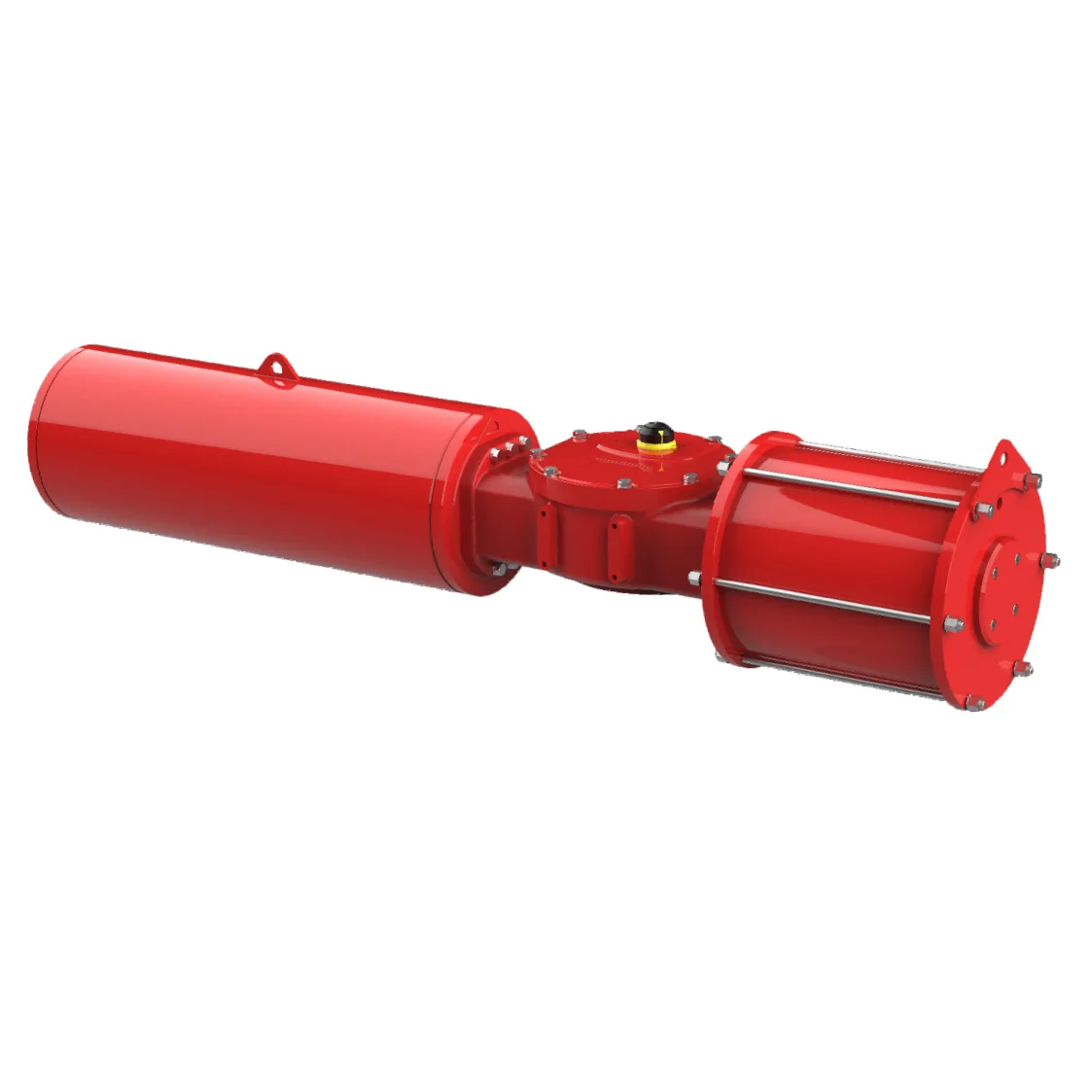
Taizhou Juhang Automation Equipment Technology Co., Ltd exemplifies this integrated approach. With a solid technical background spanning research, development, and manufacturing of valve automation solutions, the company operates high-precision CNC machining equipment and sophisticated testing infrastructure. An advanced product performance inspection and test center, paired with a robust quality management system and internally well-ordered detailed management, assures the reliability of JUHANG actuation devices across diverse industrial sectors. This commitment to systematic quality control and engineering excellence positions them as a trusted partner for projects demanding long-lasting, fail-safe actuation performance.
As industries continue to automate and digitalize, the fundamental importance of a well-engineered pneumatic actuator will not diminish. Instead, the combination of precision mechanics, rigorous in-house testing, and responsive technical support defines the new standard for process reliability. Professionals specifying fluid control equipment are advised to prioritize suppliers that demonstrate transparent quality data and long-term component traceability—attributes that directly correlate with lower total cost of ownership and safer operations.


